Sri Lanka Women Vs India Women’s National Cricket Team Timeline
08 mins
Table of Contents
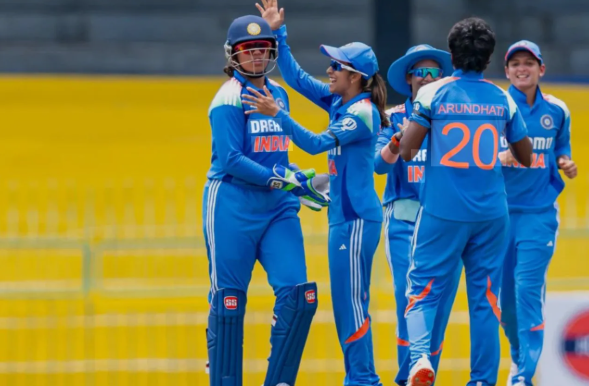
The rivalry between Sri Lanka Women and India Women has grown steadily through decades of Asian cricket competition, shaped by contrasting team strengths and evolving match dynamics. India entered the contest with stronger structure, deeper batting resources, and more international exposure, while Sri Lanka built their identity around resilience and moments of individual brilliance. Across ODIs, T20Is, and Asia Cup encounters, the head-to-head story has reflected India’s consistency and Sri Lanka’s fighting spirit. From early one-sided results to more competitive modern clashes, this rivalry captures the journey of women’s cricket growth in the subcontinent, blending skill, pressure, and national pride in every encounter.
Recent: Sri Lanka Women Vs India Women’s National Cricket Team
Date
Format
Match Context
Venue
Result
Key Highlight
Oct 09, 2024
T20I
T20 World Cup (Group)
Dubai
IND Won (82 Runs)
Harmanpreet’s explosive 52* (27)
July 28, 2024
T20I
Asia Cup Final
Dambulla
SL Won (8 Wkts)
SL crowned Asia Cup Champions
Sept 25, 2023
T20I
Asian Games Final
Hangzhou
IND Won (19 Runs)
Titas Sadhu’s lethal 3/6
Feb 15, 2023
T20I
T20 World Cup (Group)
Cape Town
IND Won (6 Wkts)
Jemimah’s anchor knock of 38*
Oct 15, 2022
T20I
Asia Cup Final
Sylhet
IND Won (8 Wkts)
Renuka Singh’s 3/5 destroys SL
Oct 01, 2022
T20I
Asia Cup (Group)
Sylhet
IND Won (41 Runs)
Jemimah Rodrigues’ 76 (53)
June 27, 2022
T20I
3rd T20I (Series)
Dambulla
SL Won (7 Wkts)
Chamari Athapaththu’s 80* (48)
Top 5 Best Individual Performances
Player Name
Date
Format
Match Context
Performance Summary
Harmanpreet Kaur
Oct 09, 2024
T20I
T20 World Cup
52* (27) — Fastest WC fifty by an Indian
Harshitha Madavi
July 28, 2024
T20I
Asia Cup Final
69* (51) — Match-winning knock under pressure
Titas Sadhu
Sept 25, 2023
T20I
Asian Games Final
3/6 (4.0) — Unplayable opening spell
Chamari Athapaththu
July 28, 2024
T20I
Asia Cup Final
61 (43) — Aggressive start to the chase
Renuka Singh
Oct 15, 2022
T20I
Asia Cup Final
3/5 (3.0) — Blew away the SL top
Best Player Analysis
Player Name
Primary Role
Recent Major Feat
Impact Rating
Key Contribution
Chamari Athapaththu
All-rounder/Capt
Asia Cup Legend
9.9 / 10
The backbone of Sri Lankan cricket.
Smriti Mandhana
Opening Batter
60 in Asia Cup Final
9.7 / 10
Consistently India’s highest run-getter vs SL.
Harmanpreet Kaur
Captain/Batter
52* in T20 WC 2024
9.6 / 10
The most experienced finisher in Asian cricket.
Deepti Sharma
All-rounder
Wicket-taking machine
9.5 / 10
Holds the record for most T20I wickets for India.
Harshitha Madavi
Top-order Batter
Unbeaten 69 in Final
9.3 / 10
Known for her calm temperament in big chases.
Renuka Singh
Strike Bowler
Swing Masterclass
9.4 / 10
Specialized in early breakthroughs with the new ball.
Head-to-Head Summary
Format
Matches Played
India Won
Sri Lanka Won
Current Cycle Dominance
T20 International
6
4
2
India won the 2024 WC group clash
Major Finals
3
2
1
Sri Lanka won the 2024 Asia Cup
First Sparks of a Subcontinental Rivalry
Sri Lanka Women vs India Women rivalry began in early limited overs encounters when both teams were building identity in Asian women’s cricket. India entered with stronger structure and batting depth while Sri Lanka relied on emerging talents and spin discipline. Their first meetings in ODI and Asia Cup formats showed India’s dominance but also glimpses of Sri Lanka’s fighting spirit. Matches were often one sided on scorecards yet they laid the foundation for a competitive subcontinental narrative. Players from both sides began shaping early reputations through steady batting, tight bowling spells and improving fielding standards as women’s cricket slowly expanded across the region. These encounters sparked a long-standing rivalry in Asian women’s cricket history and continues to evolve today
Season
Match Type
Score
Winning Team
Key Performance
2000-01
ODI
IND 220/6 vs SL 140/9
India Women
Top order batting dominance by India
2005 Asia Cup
ODI
IND 180/4 vs SL 120 all out
India Women
Spin attack control in middle overs
2012 Asia Cup
T20
IND 150/5 vs SL 148/8
India Women
Close finish with late-order hitting
2014 ODI Series
ODI
SL 210/7 vs IND 205/9
Sri Lanka Women
Chamari Athapaththu match winning innings
Asia Cup Clashes That Defined Early Rivalry Emotion
Asia Cup meetings between Sri Lanka Women and India Women brought real intensity to this rivalry. Unlike bilateral series, these games carried pressure, pride, and qualification stakes. India often entered as favorites with a stronger batting lineup and experienced spinners, while Sri Lanka relied on emotional momentum and home support in neutral venues. These clashes produced tighter scorecards than expected, with Sri Lanka occasionally pushing India deep into middle overs. India still managed to dominate most encounters through disciplined bowling and clutch batting performances. However, Sri Lanka’s spirited fight, especially in low scoring thrillers, made these Asia Cup battles a key emotional chapter in their head-to-head history and built the foundation of a competitive regional rivalry
Season
Match Type
Score
Winning Team
Key Performance
2004 Asia Cup
ODI
IND 165/6 vs SL 130/9
India Women
Controlled spin bowling in middle overs
2008 Asia Cup
ODI
IND 210/5 vs SL 180/8
India Women
Top order partnership dominance
2012 Asia Cup
T20
IND 142/6 vs SL 138/7
India Women
Tight finish with death over bowling
2016 Asia Cup
T20
SL 145/5 vs IND 140/8
Sri Lanka Women
Chamari Athapaththu explosive innings
hamari Athapaththu Era Begins to Change the Narrative
The rivalry narrative shifted when Chamari Athapaththu emerged as Sri Lanka’s most dangerous match winner against India Women. Her fearless batting style disrupted India’s earlier dominance and brought a new level of unpredictability to the contest. India still held the overall advantage in depth and consistency, but Athapaththu’s ability to single handedly change match situations forced India to rethink bowling plans. She attacked both pace and spin with equal confidence, especially in powerplay overs. Sri Lanka began to look more competitive in matches where she fired at the top. While India continued to win most encounters, the margins tightened and scorecards started reflecting genuine contest rather than one sided results, marking a turning point in the rivalry’s emotional intensity
Season
Match Type
Score
Winning Team
Key Performance
2016 Asia Cup
T20
SL 145/5 vs IND 140/8
Sri Lanka Women
Athapaththu 84 off 59 balls
2017 ODI Series
ODI
IND 250/6 vs SL 220/9
India Women
Mandhana consistent top order runs
2018 Asia Cup
T20
IND 160/4 vs SL 158/7
India Women
Tight finish, late wickets decisive
2021 ODI Series
ODI
SL 275/7 vs IND 280/5
India Women
Athapaththu 103 vs strong chase
ODI Rivalry Peak: Tactical Battles and Spin Dominance
The ODI phase of the Sri Lanka Women vs India Women rivalry reached its peak when tactical awareness and spin bowling began deciding matches. India leaned heavily on their experienced spin attack to control the middle overs, often choking Sri Lanka’s scoring rate. Sri Lanka responded with cautious starts and occasional counterattacks led by Chamari Athapaththu, but consistency remained the key difference. India’s batting depth allowed them to recover from early wickets and build strong totals. Most matches during this phase were decided in the middle overs where India’s control was superior. Sri Lanka’s fight improved, but India’s structured approach ensured they stayed ahead in most ODI encounters, reinforcing their dominance in the format
Season
Match Type
Score
Winning Team
Key Performance
2013 ODI Series
ODI
IND 240/6 vs SL 180/9
India Women
Spin duo controlled middle overs
2015 ODI Series
ODI
IND 265/7 vs SL 210/8
India Women
Mithali Raj anchoring innings
2017 ODI Series
ODI
SL 220/7 vs IND 225/5
India Women
Late order finishing under pressure
2019 ODI Series
ODI
IND 280/5 vs SL 190/10
India Women
All round dominance with spin attack
Pressure Matches in ICC Events and Qualifiers
ICC tournaments and qualification matches brought a different kind of pressure to the Sri Lanka Women vs India Women rivalry. Unlike bilateral series, every over carried knockout weight and margin for error was minimal. India often leaned on experience in big stages, using calm batting and disciplined bowling to control tense situations. Sri Lanka, meanwhile, played with freedom and emotional intensity, especially when underdogs. These matches often produced closer scorecards than expected, with Sri Lanka pushing India into uncomfortable chases or restricting them with early breakthroughs. However, India’s composure in pressure moments and deeper batting lineup usually tilted the balance in their favor. These ICC clashes added global significance to the rivalry and tested both teams under true championship conditions.
Season
Match Type
Score
Winning Team
Key Performance
2016 T20 WC
T20
IND 142/5 vs SL 110/9
India Women
Smriti Mandhana steady chase
2018 Qualifier
ODI
IND 250/7 vs SL 230/8
India Women
Middle order recovery innings
2020 T20 WC
T20
IND 160/4 vs SL 125/8
India Women
Spin choke in middle overs
2022 Asia Qualifier
ODI
SL 220/6 vs IND 224/5
India Women
Last over finish under pressure
Emotional Fan Base and Subcontinental Cricket Passion
The Sri Lanka Women vs India Women rivalry is more than just numbers on a scorecard, it reflects the emotional heartbeat of subcontinental cricket. Indian fans often expect dominance, especially given their team’s depth and experience, while Sri Lankan supporters carry pride in every underdog moment. When these two teams meet, even a group-stage match feels like a final for fans across both nations. Social media activity spikes instantly, with every boundary, wicket, or dropped catch becoming a talking point. India’s fans celebrate consistency and big-match control, while Sri Lanka’s fans rally behind individual brilliance, especially when players like Chamari Athapaththu produce special innings. Even in one-sided matches, the emotional investment remains high, proving that this rivalry has grown into a meaningful cultural cricket connection across South Asia.
Season
Match Type
Score
Winning Team
Fan Reaction Highlight
2016 Asia Cup
T20
IND 145/6 vs SL 140/7
India Women
Last-over tension, trending match discussions
2018 ODI Series
ODI
IND 270/5 vs SL 210/9
India Women
India fans celebrate strong batting depth
2021 ODI Match
ODI
SL 275/7 vs IND 280/5
India Women
Sri Lanka fans praise Athapaththu century
2022 T20I Clash
T20
IND 160/4 vs SL 125/8
India Women
Dominant spin display sparks online debate
Conclusion
Over time, the Sri Lanka Women vs India Women rivalry has transformed from predictable outcomes into a more layered and competitive contest. India still holds statistical dominance, driven by superior depth and experience, but Sri Lanka’s progress, especially through match winners like Chamari Athapaththu, has added genuine unpredictability. Each format has produced memorable moments, whether tight Asia Cup finishes or ICC pressure games. Beyond results, this rivalry reflects the rise of women’s cricket in South Asia, where passion, national pride, and growing talent continue to shape future encounters. The gap may exist, but the competitive spirit is now stronger than ever.
 1
1