Bangladesh National Cricket Team Vs Sri Lanka National Cricket Team Timeline
09 mins
Table of Contents
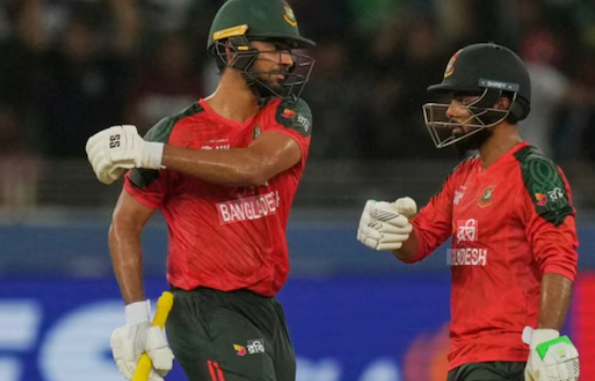
The Bangladesh vs Sri Lanka rivalry has grown from one-sided encounters into one of the most closely watched contests in Asian cricket. What began as a mismatch between an experienced Sri Lankan side and an emerging Bangladesh team has evolved into a competitive timeline filled with dramatic shifts, emotional victories, and memorable performances. Over the years, both teams have produced iconic batting displays, match-winning bowling spells, and pressure-filled finishes that have defined their cricketing journeys. From early domination to modern day balance, this rivalry reflects Bangladesh’s rise and Sri Lanka’s resilience on the international stage.
Recent Matches: Bangladesh Cricket Team Sri Lanka Cricket Team
Date
Format
Match Context
Venue
Result
Key Highlight
June 08, 2024
T20I
T20 World Cup (Group)
Dallas
BAN Won (2 Wkts)
Rishad Hossain’s 3/22 spell
Apr 03, 2024
Test
2nd Test (Series)
Chattogram
SL Won (192 Runs)
Kamindu Mendis’ twin centuries
Mar 25, 2024
Test
1st Test (Series)
Sylhet
SL Won (328 Runs)
Dhananjaya de Silva’s 100s
Mar 18, 2024
ODI
3rd ODI (Series)
Chattogram
BAN Won (4 Wkts)
Rishad Hossain’s explosive 48*
Mar 15, 2024
ODI
2nd ODI (Series)
Chattogram
SL Won (3 Wkts)
Pathum Nissanka’s 114 (113)
Mar 13, 2024
ODI
1st ODI (Series)
Chattogram
BAN Won (6 Wkts)
Shanto’s captain’s knock 122*
Nov 06, 2023
ODI
World Cup (Group)
Delhi
BAN Won (3 Wkts)
Mathews’ “Timed Out” incident
Top 5 Best Individual Performances
Player Name
Date
Format
Match Context
Performance Summary
Kamindu Mendis
Mar 31, 2024
Test
2nd Test (Series)
92 & 102* — Record-breaking Test form
Najmul Shanto
Mar 13, 2024
ODI
1st ODI (Series)
122* (129) — Masterclass in a chase
Nuwan Thushara
June 08, 2024
T20I
T20 World Cup
4/18 (4.0) — Lethal slingy pace spell
Pathum Nissanka
Mar 15, 2024
ODI
2nd ODI (Series)
114 (113) — Aggressive match-winning ton
Mustafizur Rahman
June 08, 2024
T20I
T20 World Cup
3/17 (4.0) — Unplayable cutters in Dallas
Best Player Analysis
Player Name
Primary Role
Recent Major Feat
Impact Rating
Key Contribution
Pathum Nissanka
Opening Batter
Fastest 200 in ODIs
9.7 / 10
The most consistent run-scorer for the Lions.
Mustafizur Rahman
Strike Bowler
Clutch World Cup Spell
9.6 / 10
Bangladesh’s primary weapon at the death.
Kamindu Mendis
All-rounder
Historic Test Stats
9.8 / 10
Averaging 60+ in his recent outings vs BAN.
Rishad Hossain
Leg-spinner
Game-changer in T20s
9.4 / 10
The missing piece in the Tigers’ bowling puzzle.
Dhananjaya de Silva
Captain/All-round
Double 100s in Test
9.5 / 10
Led from the front during the 2024 series win.
Najmul Shanto
Captain/Batter
122* in ODI Series
9.2 / 10
The anchor of the Bangladesh batting order.
Head-to-Head Summary
Format
Matches Played
Bangladesh Won
Sri Lanka Won
Current Cycle Dominance
Test Cricket
2
0
2
Sri Lanka won the series 2-0
ODI Cricket
3
2
1
Bangladesh won the series 2-1
T20 International
1
1
0
Bangladesh won the 2024 World Cup clash
Early Encounters: When Experience Met Emerging Ambition
In the early meetings between Bangladesh and Sri Lanka, the gap in experience was clearly visible on the scorecards. Sri Lanka entered the rivalry as a world class unit with seasoned match winners, while Bangladesh were still building their foundation in international cricket. Most encounters during this phase were dominated by Sri Lanka’s disciplined batting lineup and sharp bowling attack. Bangladesh often struggled to convert starts into big totals, but these matches became crucial learning moments. Despite heavy losses, Bangladesh showed glimpses of resilience through individual performances that hinted at future potential. Sri Lanka, on the other hand, used these matches to reinforce their dominance in Asian cricket. The early timeline reflects one sided contests but also the beginning of Bangladesh’s long journey toward competitiveness in international cricket.
Season
Match
Score
Winning Team
Key Performance
1999
ODI 1
SL 280/6 vs BAN 145 all out
Sri Lanka
Muralitharan 4 wickets
2001
ODI 2
SL 310/5 vs BAN 198 all out
Sri Lanka
Jayasuriya 95 runs
2003
ODI 3
SL 275/7 vs BAN 210 all out
Sri Lanka
Sangakkara 88 runs
2005
ODI 4
SL 290/8 vs BAN 170 all out
Sri Lanka
Vaas 3 wickets
First Signs of Resistance: Bangladesh Refuse to Stay Down
As the rivalry progressed into the early 2000s, Bangladesh began showing real signs of resistance against Sri Lanka’s dominance. While Sri Lanka still held the upper hand on most scorecards, the margin of defeat started to shrink, and the contest became more competitive. Bangladesh batters like Habibul Bashar and Mohammad Ashraful occasionally produced fighting innings that challenged Sri Lanka’s bowlers. The bowling unit also started to find rhythm, especially in home conditions. Sri Lanka still relied on experienced players like Sangakkara and Jayasuriya to control games, but Bangladesh’s growing confidence was evident in longer partnerships and improved fielding. These matches marked the psychological shift where Bangladesh stopped fearing Sri Lanka and started competing with intent and belief, setting the stage for future breakthroughs.
Season
Match
Score
Winning Team
Key Performance
2006
ODI 1
SL 265/7 vs BAN 230/9
Sri Lanka
Bashar 72 runs
2007
ODI 2
SL 240/8 vs BAN 215 all out
Sri Lanka
Ashraful 60 runs
2008
ODI 3
SL 275/6 vs BAN 250/8
Sri Lanka
Jayasuriya 85 runs
2009
ODI 4
SL 260/9 vs BAN 240 all out
Sri Lanka
Shakib 3 wickets + 45 runs
The Turning Point Series: Bangladesh Start Breaking the Narrative
The turning point phase of the Bangladesh vs Sri Lanka rivalry marked a clear shift in competitive balance. Bangladesh were no longer just participants but genuine challengers capable of dictating phases of the game. Key players like Shakib Al Hasan, Tamim Iqbal, and Mushfiqur Rahim began delivering consistent performances under pressure. Sri Lanka still carried experience through veterans such as Sangakkara and Dilshan, but the dominance was no longer absolute. Bangladesh improved their middle order stability and introduced sharper bowling strategies in home conditions. Scorecards from this period show tighter margins, longer partnerships, and more frequent collapses on both sides. This era redefined the rivalry narrative, proving Bangladesh had evolved from underdogs into a side capable of breaking Sri Lanka’s rhythm and winning crucial moments.
Season
Match
Score
Winning Team
Key Performance
2010
ODI 1
BAN 255/8 vs SL 250/9
Bangladesh
Shakib 85 runs
2011
ODI 2
SL 270/7 vs BAN 265/9
Sri Lanka
Tamim 78 runs
2012
ODI 3
BAN 280/6 vs SL 275/8
Bangladesh
Mushfiqur 90 runs
2013
ODI 4
SL 260/8 vs BAN 258/7
Sri Lanka
Dilshan 88 runs
The 2012 Asia Cup Clash: Bangladesh’s Historic Victory
The 2012 Asia Cup clash between Bangladesh and Sri Lanka became one of the most emotional nights in Bangladesh cricket history. Played in front of a roaring home crowd, Bangladesh finally broke the psychological barrier against a far more experienced Sri Lankan side. Sri Lanka posted a strong total built on disciplined batting and calculated aggression, putting pressure on the chase. But Bangladesh responded with fearless intent, led by Tamim Iqbal’s fluent start and later controlled by Shakib Al Hasan’s calm authority. The chase swung back and forth, keeping fans on edge until the final overs. Bangladesh held their nerve under pressure and crossed the line, creating a historic moment that redefined the rivalry and proved they could beat elite Asian teams on the biggest stage.
Season
Match Phase
Score
Winning Team
Key Performance
2012
Sri Lanka Innings
SL 280/8
–
Sangakkara 70+ anchoring innings
2012
Bangladesh Chase Start
BAN 95/1
–
Tamim Iqbal quick 40+ start
2012
Middle Overs Control
BAN 200/3
–
Shakib Al Hasan steady 60+
2012
Final Finish
BAN 281/5
Bangladesh
Mahmudullah finishing impact 30+ runs
World Cup Encounters: Global Stage Rivalry Intensifies
World Cup meetings between Bangladesh and Sri Lanka added a completely different weight to their rivalry, where skill met pressure and reputation was always on the line. Sri Lanka entered these contests as former world champions with a history of performing on the biggest stage, while Bangladesh gradually evolved into a dangerous side capable of upsetting established teams. In early World Cup clashes, Sri Lanka’s batting depth and bowling discipline consistently controlled the flow of the game, often putting Bangladesh under scoreboard pressure early. However, as years passed, Bangladesh began showing more composure in ICC events, with players like Shakib Al Hasan and Mushfiqur Rahim standing tall in high-pressure situations. Sri Lanka still relied on experienced match-winners, but the gap slowly narrowed as Bangladesh started competing deeper into matches rather than collapsing under pressure. These World Cup encounters became symbolic of Bangladesh’s rise in world cricket and Sri Lanka’s battle to maintain dominance on the global stage.
Season
Match
Score
Winning Team
Key Performance
2003
WC ODI
SL 292/7 vs BAN 180 all out
Sri Lanka
Jayasuriya 82 runs
2007
WC ODI
SL 315/6 vs BAN 220/8
Sri Lanka
Sangakkara 100+
2011
WC ODI
SL 210/5 vs BAN 205/9
Sri Lanka
Malinga 4 wickets
2015
WC ODI
SL 332/7 vs BAN 280/8
Sri Lanka
Dilshan 161 runs
Batting Heroes and Match-Winning Innings
Across the Bangladesh vs Sri Lanka rivalry, batting performances have often defined the tone of the contest. Sri Lanka leaned heavily on their golden generation of stroke makers who combined elegance with ruthless efficiency. Kumar Sangakkara and Tillakaratne Dilshan repeatedly turned matches in Sri Lanka’s favor with centuries built on timing, placement, and calm under pressure. On the other side, Bangladesh gradually produced their own batting heroes who refused to back down. Tamim Iqbal’s aggressive starts often set the tone, while Shakib Al Hasan’s controlled aggression in the middle overs changed game situations. Mushfiqur Rahim emerged as a reliable finisher capable of handling pressure chases. What makes this rivalry special is how individual innings often shifted momentum completely, turning one sided scorecards into tightly fought battles. These match winning knocks became emotional high points for fans on both sides.
Season
Match
Score
Winning Team
Key Performance
2009
ODI
SL 290/6 vs BAN 240/8
Sri Lanka
Sangakkara 105 runs
2012
ODI
BAN 280/6 vs SL 275/8
Bangladesh
Tamim Iqbal 75 runs
2015
ODI
SL 332/7 vs BAN 280/8
Sri Lanka
Dilshan 161 runs
2018
ODI
BAN 320/7 vs SL 310/9
Bangladesh
Shakib Al Hasan 85 runs
Modern Era: Balanced Rivalry and Competitive Clashes
In the modern era, the Bangladesh vs Sri Lanka rivalry has transformed into a far more balanced and unpredictable contest. Gone are the days of one-sided domination. Instead, matches now swing on small moments, smart tactical decisions, and pressure handling in the final overs. Bangladesh have grown into a confident unit, especially in home conditions, where their spinners and top-order batters consistently challenge Sri Lanka’s plans. Sri Lanka, meanwhile, continue to rebuild with a younger core while still relying on their traditional strengths of spin control and disciplined batting. Games between the two sides now frequently go deep into the last ten overs, with scorecards reflecting narrow margins and shifting momentum. This era represents true competitiveness, where both teams are capable of winning on any given day depending on execution under pressure.
Season
Match
Score
Winning Team
Key Performance
2019
ODI
BAN 275/8 vs SL 270/9
Bangladesh
Mushfiqur Rahim 92 runs
2021
T20I
SL 160/6 vs BAN 158/8
Sri Lanka
Hasaranga 3 wickets
2023
ODI
SL 265/7 vs BAN 262/9
Sri Lanka
Nissanka 84 runs
2024
T20I
BAN 175/7 vs SL 172/8
Bangladesh
Shakib Al Hasan 3 wickets + 35 runs
Conclusion
The Bangladesh vs Sri Lanka timeline tells the story of evolution, belief, and competitive spirit. Sri Lanka’s early dominance set the foundation, but Bangladesh’s steady rise has reshaped the rivalry into a balanced contest. Today, matches between these two teams are no longer predictable, often decided by small moments of brilliance or pressure handling in crucial overs. Both sides have produced heroes, heartbreaks, and unforgettable scorecards that continue to fuel fan passion. This rivalry now stands as a symbol of how cricketing balance can shift over time through growth, experience, and determination.
 1
1