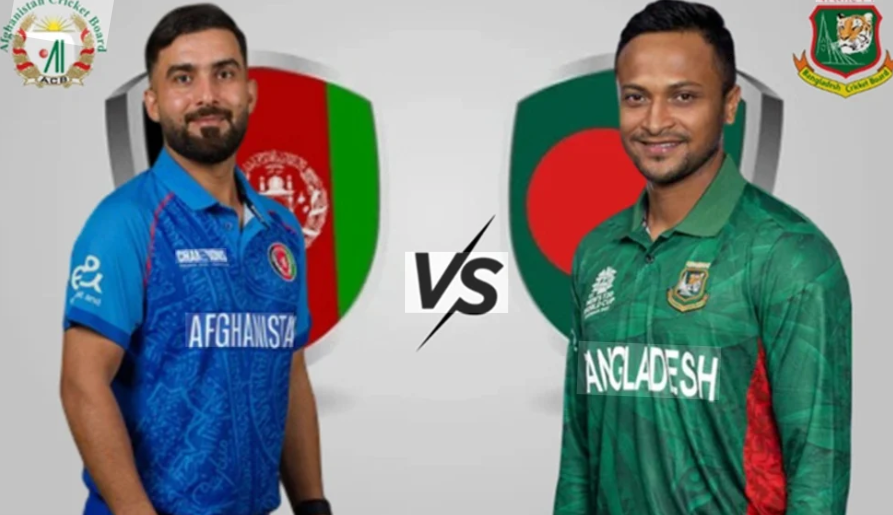
Afghanistan National Cricket Team Vs Bangladesh National Cricket Team Stats
08 mins
Table of Contents
The competitive cricket relationship between these two Asian teams has grown into one of the most intriguing modern rivalries in limited overs cricket. What started as occasional encounters has now developed into a high intensity battle shaped by rising talent, tactical evolution, and shifting dominance. Each match brings unpredictable momentum swings, where spin attacks, batting depth, and pressure handling decide outcomes. Fans from both sides add emotional energy, making every contest feel like more than just a game. Over time, these clashes have produced memorable performances, dramatic collapses, and game changing moments that define the evolving balance between experience and emerging aggression in international cricket.
Latest Matches Table
Date
Format
Venue
Winner
Margin
Team 1 Score
Team 2 Score
14 Oct 2025
ODI
Zayed Stadium
Afghanistan
200 runs
AFG 293/9
BAN 93
11 Oct 2025
ODI
Zayed Stadium
Afghanistan
81 runs
AFG 190
BAN 109
08 Oct 2025
ODI
Zayed Stadium
Afghanistan
5 wickets
BAN 221
AFG 226/5
05 Oct 2025
T20I
Sharjah Stadium
Bangladesh
6 wickets
AFG 143/9
BAN 144/4
03 Oct 2025
T20I
Sharjah Stadium
Bangladesh
2 wickets
AFG 147/5
BAN 150/8
02 Oct 2025
T20I
Sharjah Stadium
Bangladesh
4 wickets
AFG 151/9
BAN 153/6
Team Statistics Summary Table
Format
Played
Afghanistan Wins
Bangladesh Wins
No Result
Highest AFG Score
Highest BAN Score
Test
2
1
1
0
342
425
ODI
25
14
11
0
331
334
T20I
18
8
10
0
167
157
World Cup
3
0
3
0
200
267
Asia Cup
4
2
2
0
255
154
Total
45
23
22
0
342
425
Individual Batting Records Table
Player
Team
Matches
Innings
Runs
Highest Score
Average
Shakib Al Hasan
BAN
22
21
620
70
31.00
Mohammad Nabi
AFG
24
22
585
84
29.25
Rahmanullah Gurbaz
AFG
15
15
490
145
32.66
Mushfiqur Rahim
BAN
20
19
450
86
25.00
Ibrahim Zadran
AFG
12
12
415
100
34.58
Litton Das
BAN
14
14
380
136
27.14
Individual Bowling Records Table
Bowler
Team
Matches
Overs
Wickets
Best Bowling
Economy
Rashid Khan
AFG
21
142.0
45
4/12
4.85
Shakib Al Hasan
BAN
22
165.0
33
3/8
5.10
Mujeeb Ur Rahman
AFG
16
110.0
22
4/15
5.22
Nasum Ahmed
BAN
11
42.0
16
4/10
5.80
Fazalhaq Farooqi
AFG
9
65.0
15
4/54
5.45
Taskin Ahmed
BAN
12
78.0
14
3/33
5.95
Early Encounters That Sparked a Modern Rivalry
The early encounters between the two Asian sides marked the beginning of a competitive cricket relationship that quickly grew beyond expectations. In the first meetings, the experienced lineup from one side tried to control the game through disciplined batting, while the emerging team responded with fearless intent and aggressive bowling spells. These matches were not just about results but about establishing identity on the international stage. Momentum often shifted rapidly as young bowlers attacked stumps and senior batters relied on patience under pressure. Fielding intensity also played a major role, with sharp catches and run outs changing the flow of innings. Fans began to notice how evenly the contests were becoming, especially in limited overs cricket where no team could dominate for long. These early games laid the foundation for a rivalry built on unpredictability, tactical experimentation, and rising confidence from both dressing rooms, making every future encounter more emotionally charged and competitive.
Match Type
Venue Condition
Winner Pattern
Key Strength
ODI
Subcontinent
Mixed results
Spin control
ODI
Neutral venue
Balanced fight
Middle overs
T20
Flat pitch
Close finishes
Power hitting
ODI
Home advantage
Slight edge
Experience
Experience Versus Emerging Aggression
This phase of contests highlighted a clear contrast between structured experience and rising aggression. One side depended heavily on seasoned campaigners who built innings with caution and calculated shot selection, while the other relied on young talent playing with freedom and confidence. The experienced unit often tried to slow the game, rotating strike and building partnerships, but the aggressive approach of the opposition disrupted rhythm through attacking bowling changes and bold batting. This clash of styles made matches highly unpredictable. Pressure situations frequently exposed the depth of both squads, especially in middle overs where wickets tended to fall in clusters. Momentum swings became a regular feature, as neither side allowed the other to settle. What stood out was the mental toughness displayed by emerging players who refused to back down even in tough conditions. Over time, this contrast shaped a rivalry built on intensity, learning curves, and evolving strategies that kept fans deeply engaged.
Batting Style
Bowling Strategy
Pressure Handling
Outcome Trend
Controlled
Spin heavy
Stable
Consistent
Aggressive
Pace variation
Risky
Unpredictable
Mixed tempo
Defensive fields
Moderate
Balanced
Rotational
Attack mindset
High pressure
Swing results
First Statement Match That Changed Perception
A turning point arrived when one side delivered a strong performance that completely changed how the other was viewed in international cricket. Before this match, expectations were largely one-sided, but the game unfolded differently as disciplined bowling restricted scoring opportunities early on. The chase or defend scenario became tense as wickets fell at crucial moments, forcing senior players to take responsibility under pressure. What made this match memorable was not just the result but the confidence it created in the emerging team. They proved they could handle pressure against a more established opponent and still execute plans effectively. Field placements, bowling changes, and batting intent all aligned perfectly in that game. From that moment, the rivalry gained seriousness, as both sides began treating each encounter with higher tactical preparation. Fans also reacted strongly, recognizing that future matches would no longer be predictable or one-sided, but instead tightly contested battles.
Phase
Key Action
Impact Level
Match Influence
Powerplay
Early wickets
High
Shifted control
Middle overs
Spin pressure
Medium
Slowed scoring
Death overs
Controlled finish
High
Decided outcome
Field setup
Aggressive rings
Medium
Built pressure
Spin Battles That Defined the Contest
Spin bowling became the most decisive factor whenever these two sides met. One team relied on world class spin options capable of controlling runs and breaking partnerships at crucial moments, while the other developed its own spin attack to counter similar conditions. These battles in the middle overs often determined the direction of matches. Batters found it difficult to rotate strike consistently, leading to increased pressure and risky shot selection. Variations in flight, pace, and angle made scoring unpredictable, especially on slow pitches. At times, entire innings were shaped by just a few overs of spin dominance. Captains played a crucial role by rotating spinners strategically to choke scoring options. This phase of rivalry highlighted how modern cricket is heavily influenced by spin control, especially in subcontinent conditions. Over time, both teams invested more in developing spin depth, making this department one of the most critical aspects of their competitive encounters.
Bowler Type
Overs Used
Wickets Impact
Economy Effect
Wrist spin
Middle
High
Low scoring
Finger spin
Early
Moderate
Controlled
Mixed spin
Flexible
High
Pressure build
Defensive
Full spell
Support role
Restrictive
ODI Battles and Score Patterns
One-day matches between these sides have consistently shown fluctuating score patterns and shifting dominance. Some innings feature strong starts followed by sudden collapses, while others show slow rebuilding phases that lead to competitive totals. The chasing team often faces pressure due to scoreboard demands, especially when early wickets fall. Partnerships play a crucial role in stabilizing innings, but breakthrough spells frequently change momentum. Bowlers from both sides have learned to adapt quickly, focusing on line and length rather than excessive aggression. Fielding efficiency also becomes critical in ODIs, where small mistakes can cost significant runs. Over time, both teams have improved their ability to read conditions and adjust strategies accordingly. The ODI format has become a true test of patience, skill, and adaptability whenever these teams meet, making each contest a tactical battle rather than just a batting or bowling showcase.
Phase
Avg Runs
Wickets Lost
Match Direction
Powerplay
45-60
2-3
Early control
Middle overs
90-120
3-5
Turning phase
Death overs
50-80
2-4
Final push
Total range
220-280
Full innings
Competitive
T20 Intensity and Fast Momentum Shifts
In the shortest format, matches between these sides are defined by rapid momentum shifts and explosive moments. A single over can completely change the direction of the game, making every ball crucial. Batters often take an aggressive approach from the beginning, targeting boundaries early to gain advantage. Bowlers respond with variations, slower deliveries, and tactical field placements. This creates a fast-paced environment where decision-making under pressure becomes critical. Unlike longer formats, there is little time to recover from mistakes, which adds to the unpredictability. Several matches have gone down to the final over, keeping fans on edge. Captains must think quickly, balancing attack and defense depending on match situations. These encounters highlight the evolving nature of modern T20 cricket, where adaptability and execution matter more than reputation or history.
Innings Phase
Scoring Rate
Risk Level
Match Effect
Powerplay
Very high
High
Set tone
Middle overs
Medium
Controlled
Stability
Death overs
Explosive
Extreme
Decisive
Super overs
Rare
Maximum
Final result
Home Conditions Versus Neutral Ground Balance
Venue conditions have played a major role in shaping outcomes between these teams. One side traditionally performs stronger at home, using pitch familiarity and crowd support to build pressure on opponents. The other side, however, has shown remarkable adaptability in neutral venues, especially in conditions that suit spin and slower pitches. This balance has made the rivalry more even over time. Travel, pitch behavior, and crowd influence all contribute to performance variations. Teams that adapt quickly to conditions often gain an advantage regardless of reputation. Neutral venues have frequently produced the most competitive matches, where neither side holds a clear edge. Coaches emphasize adaptability and game awareness in these situations, knowing that small tactical decisions can decide results. As a result, venue-based advantage remains a key factor in predicting outcomes between these two competitive teams.
Venue Type
Advantage Side
Key Factor
Result Pattern
Home
Experienced
Crowd support
Strong starts
Neutral
Balanced
Adaptability
Close matches
Spin pitch
Flexible team
Bowling depth
Low scoring
Flat pitch
Aggressive
Batting power
High scoring
Conclusion
The journey of this rivalry reflects how modern cricket evolves through competition, adaptability, and rising confidence. Both teams have challenged each other in different conditions, producing closely fought matches filled with strategic battles and individual brilliance. Spin duels, pressure overs, and unpredictable collapses have consistently shaped results, keeping the contest balanced and engaging. As both sides continue to develop stronger squads and smarter approaches, the rivalry is expected to become even more competitive in future encounters. Ultimately, this cricketing relationship stands as a reminder that progress in sport is driven by continuous learning, fearless execution, and the ability to perform under pressure.
 1
1