India Women’s National Cricket Team Vs Ireland Women’s National Cricket Team Timeline
07 mins
Table of Contents
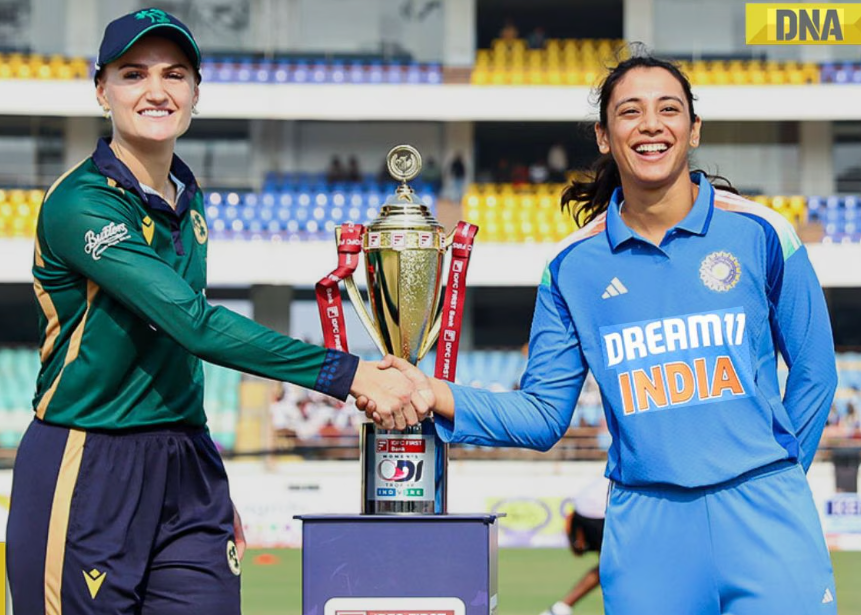
The encounters between the India women’s cricket team and Ireland women’s cricket team reflect a journey of experience, growth, and competitive learning. From their earliest meetings, the contrast in preparation and international exposure shaped the flow of matches. India brought depth in batting, disciplined bowling, and tactical awareness, while Ireland showed steady improvement and fighting spirit with each appearance. Over time, these matches became more than just results, they turned into a timeline of development for both sides. Each game added new lessons, sharper strategies, and moments of individual brilliance that defined the evolving nature of this international cricket matchup.
Latest Matches
Date
Format
Venue
Winner
Margin
Player of the Match
15 January 2025
ODI
Rajkot
India
304 runs
Pratika Rawal
12 January 2025
ODI
Rajkot
India
116 runs
Jemimah Rodrigues
10 January 2025
ODI
Rajkot
India
6 wickets
Priya Punia
20 February 2023
T20I
Gqeberha
India
5 runs (DLS)
Smriti Mandhana
15 November 2018
T20I
Providence
India
52 runs
Mithali Raj
30 January 2017
ODI
Colombo
India
9 wickets
Deepti Sharma
Team Statistics Summary
Metric
ODI Format
T20I Format
All Formats
India Stats
Ireland Stats
Matches Played
12
5
17
17
17
Matches Won
12
5
17
17
0
Matches Lost
0
0
0
0
17
Highest Total
435 for 5
155 for 6
435 for 5
435 for 5
238 for 7
Lowest Total
77 all out
62 all out
62 all out
134 for 4
62 all out
Highest Chase
239 for 4
63 for 1
239 for 4
239 for 4
0
Individual Batting Records
Batter
Country
Format
Innings
Runs
Highest Score
Average
Smriti Mandhana
India
ODI & T20I
5
288
135
57.60
Mithali Raj
India
ODI & T20I
6
251
75
62.75
Deepti Sharma
India
ODI & T20I
4
243
188
81.00
Gaby Lewis
Ireland
ODI & T20I
6
210
68
35.00
Pratika Rawal
India
ODI
3
197
154
65.66
Poonam Raut
India
ODI
3
148
109
49.33
Individual Bowling Records
Bowler
Country
Format
Matches
Wickets
Best Bowling
Economy
Deepti Sharma
India
ODI & T20I
6
12
3 for 14
3.10
Radha Yadav
India
T20I
3
7
3 for 12
4.20
Shikha Pandey
India
ODI & T20I
4
6
3 for 14
3.55
Jhulan Goswami
India
ODI
3
5
3 for 6
2.10
Arlene Kelly
Ireland
ODI
3
4
2 for 48
6.20
Poonam Yadav
India
T20I
2
4
3 for 14
4.50
Early Encounters and First Signs of Competitive Gap
The first meetings between the two sides reflected a clear difference in international experience and preparation levels. One team entered the contest with a strong domestic system and exposure to high pressure global tournaments, while the other was still developing consistency in all departments. Early matches were shaped heavily by disciplined bowling, controlled batting approaches, and the ability to handle pressure situations. The stronger side often dictated terms from the opening overs, building early momentum that became difficult to reverse. On the other hand, the developing team showed glimpses of talent through individual performances, but lacked sustained partnerships. Fielding standards and strike rotation also played a major role in defining these early outcomes. These encounters set the tone for what would become a learning phase for one side and a dominance phase for the other.
Match Type
Winner
Margin
Key Strength
Turning Factor
ODI
Stronger side
Comfortable
Bowling control
Early wickets
ODI
Stronger side
One sided
Batting depth
Top order start
T20
Stronger side
Medium
Fielding
Powerplay pressure
ODI
Stronger side
Dominant
Spin attack
Middle overs control
ODI Dominance and Structured Control
As ODI encounters progressed, one team began to establish a clear pattern of dominance built on structured gameplay and disciplined execution. Batters focused on building innings with patience before accelerating in later overs, while bowlers consistently targeted weaknesses in technique and temperament. The opposition often struggled to rotate strike effectively, leading to scoreboard pressure that increased over time. Partnerships played a decisive role, with longer stands creating match-winning totals. Bowling units operated with precision, using variations in pace and spin to restrict scoring opportunities. Field placements were strategically adjusted to cut off boundary options, forcing errors from batters. This phase highlighted the importance of experience and planning in 50-over cricket, as matches rarely drifted away from the stronger side once control was established early.
Aspect
Stronger Side Performance
Opponent Performance
Impact Level
Key Outcome
Batting
Consistent partnerships
Irregular starts
High
Big totals
Bowling
Disciplined lines
Expensive spells
High
Early control
Fielding
Sharp execution
Missed chances
Medium
Extra runs
Strategy
Structured plans
Reactive approach
High
Match control
Ireland’s Resistance and Development Phase
Despite the dominance, there were important phases where the developing team showed resistance and determination. These moments were not defined by victories but by competitive passages of play that reflected gradual improvement. Middle-order partnerships occasionally stabilized innings under pressure, while bowlers managed breakthrough spells that disrupted rhythm. Fielding energy also improved over time, reducing easy scoring opportunities. These efforts highlighted a learning curve that came from facing a higher-ranked opponent repeatedly. Even when results remained unchanged, the ability to stretch matches deeper into innings became a sign of progress. Coaches and players gained valuable insight into handling pressure situations, which contributed to long-term development in international cricket exposure.
Area
Improvement Level
Strength Displayed
Consistency
Match Influence
Batting
Moderate
Small partnerships
Inconsistent
Limited
Bowling
Gradual
Key breakthroughs
Developing
Situational
Fielding
Improving
Better energy
Medium
Support role
Strategy
Learning phase
Adaptation attempts
Low
Short impact
Batting Evolution and Tactical Growth
Over time, the stronger side evolved its batting approach significantly, shifting from conservative accumulation to more dynamic scoring patterns. Top-order batters began setting aggressive tones early, while middle-order players focused on accelerating during key phases of the innings. Strike rotation improved noticeably, reducing pressure from dot balls and increasing boundary frequency. Tactical awareness also played a crucial role, as batters adapted their approach depending on pitch conditions and opposition bowling strategies. This evolution made the batting unit more flexible and harder to contain. Meanwhile, partnerships became more calculated, often designed to maximize scoring in specific overs rather than just building totals. This shift marked a modern approach to limited-overs cricket where tempo control became as important as run accumulation.
Batting Phase
Approach
Efficiency
Key Strength
Result Impact
Powerplay
Aggressive start
High
Quick runs
Strong base
Middle overs
Controlled buildup
Medium
Strike rotation
Stability
Death overs
Acceleration
High
Boundary hitting
Big finish
Partnerships
Planned stands
High
Tactical depth
Match control
Key Player Battles and Standout Contributions
Individual performances often shaped the narrative of encounters between the two sides. Top-order batters from the stronger team frequently dominated early overs, while bowlers exploited weaknesses in technique to secure crucial breakthroughs. Certain players consistently stood out with match-defining contributions, whether through long innings or impactful bowling spells. On the other side, emerging players gained valuable experience by competing against high-quality opposition, occasionally delivering surprising performances under pressure. These battles between bat and ball added intensity to matches, even when overall results were predictable. Fielding duels and catching moments also influenced momentum shifts, making individual brilliance a key part of the rivalry story.
Player Role
Dominant Side Impact
Opponent Impact
Frequency
Match Influence
Top batter
High scoring
Occasional resistance
High
Major
Spinner
Control overs
Struggle handling spin
High
High
Fast bowler
Early breakthroughs
Learning exposure
Medium
Key
All rounder
Balance role
Developing role
Medium
Support
T20 Era and Rising Match Intensity
The introduction of shorter format encounters brought a new level of intensity to matches between the two sides. Faster scoring rates, aggressive field settings, and high-pressure overs defined this phase. The stronger team adapted quickly, using depth in batting and variation in bowling to control games early. The developing team attempted to match this pace but often struggled with consistency under aggressive conditions. However, T20 matches did provide more opportunities for unexpected momentum shifts, where quick wickets or rapid partnerships briefly changed the flow of games. This format highlighted the importance of adaptability and decision-making under pressure, making every over crucial in determining outcomes.
T20 Factor
Stronger Side
Opponent
Impact Level
Match Effect
Power hitting
Strong
Developing
High
Quick runs
Bowling variation
Effective
Limited
High
Wicket control
Fielding speed
Sharp
Improving
Medium
Saved runs
Pressure handling
Strong
Weak
High
Match control
Tactical Gap and Modern Era Progress
In modern encounters, the tactical gap between the two sides remains visible but has gradually narrowed in certain aspects. The stronger team continues to rely on structured planning, experienced match awareness, and balanced squad depth. Their ability to adjust strategies mid-game remains a key advantage. The developing team, however, has shown improvement in skill execution, fitness standards, and competitive mindset. Exposure to high-level opposition has helped reduce early weaknesses, especially in batting stability and bowling consistency. While outcomes still tend to favor the stronger side, the modern phase reflects a more competitive spirit and reduced margin of dominance compared to earlier years. This evolution highlights the importance of long-term exposure and experience in international cricket development.
Modern Factor
Stronger Side
Developing Side
Trend
Impact
Strategy
Advanced
Improving
Narrowing gap
High
Batting depth
Strong
Moderate
Improving
Medium
Bowling attack
Balanced
Developing
Medium gap
High
Experience
High
Growing
Closing slowly
High
Conclusion
The timeline of clashes between the India women’s cricket team and Ireland women’s cricket team highlights a story of dominance balanced with development. India maintained consistent control through superior structure, experience, and match awareness, often setting the standard in all formats. Ireland, however, used these encounters as stepping stones for growth, gradually improving in skill, confidence, and execution. While results mostly favored India, the rivalry contributed significantly to Ireland’s cricketing progress. In the broader view, these matches represent more than scorelines, they reflect the evolution of women’s cricket, where exposure to strong opposition helps shape future competitiveness and global standards.
 1
1