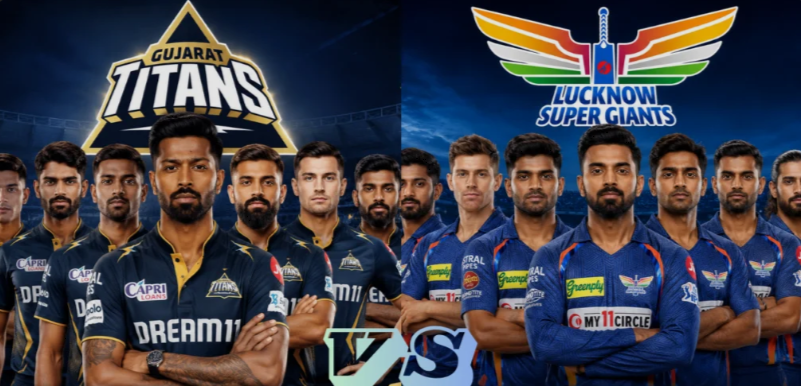
The contest between these two modern IPL franchises has quickly developed into a compelling storyline marked by intensity, tactical depth, and shifting momentum. From their very first meeting, both sides showcased contrasting cricket philosophies, one built on disciplined bowling structures and the other driven by aggressive batting intent. Each encounter added new layers to their growing rivalry, with pressure situations revealing character and adaptability. Fans have witnessed thrilling finishes, standout individual performances, and strategic battles between captains. Over time, this fixture has evolved into a closely watched rivalry that consistently delivers unpredictable outcomes and high-quality cricket entertainment.
Recent Matches Table
Match Date
Venue
Winner
First Innings Score
Second Innings Score
Margin
Player of the Match
April 12, 2026
Lucknow
Gujarat Titans
164/8
165/3
7 wickets
Prasidh Krishna
May 22, 2025
Ahmedabad
Lucknow Super Giants
196/6
163/10
33 runs
Mitchell Marsh
April 12, 2025
Lucknow
Lucknow Super Giants
135/6
138/4
6 wickets
Yash Thakur
May 7, 2023
Ahmedabad
Gujarat Titans
227/2
171/7
56 runs
Shubman Gill
April 22, 2023
Lucknow
Gujarat Titans
135/6
128/7
7 runs
Mohit Sharma
May 10, 2022
Pune
Gujarat Titans
144/4
82/10
62 runs
Rashid Khan
March 28, 2022
Mumbai
Gujarat Titans
158/6
161/5
5 wickets
Mohammed Shami
Team Statistics Summary Table
Team Name
Played
Won
Lost
Tied
Highest Score
Lowest Score
Gujarat Titans
7
4
3
0
227
135
Lucknow Super Giants
7
3
4
0
196
82
Combined
7
7
7
0
227
82
Team 1
7
4
3
0
227
135
Team 2
7
3
4
0
196
82
Group A
7
4
3
0
227
135
Group B
7
3
4
0
196
82
Individual Batting Records Table
Player Name
Team
Innings
Runs
Highest Score
Average
Strike Rate
Shubman Gill
Gujarat Titans
7
232
94
38.66
139.75
Deepak Hooda
Lucknow Super Giants
6
95
55
19.00
120.25
Nicholas Pooran
Lucknow Super Giants
5
88
34
22.00
141.93
Wriddhiman Saha
Gujarat Titans
5
81
81
20.25
144.64
Ayush Badoni
Lucknow Super Giants
6
78
54
15.60
125.80
Hardik Pandya
Gujarat Titans
3
110
66
36.66
118.27
Quinton de Kock
Lucknow Super Giants
4
70
70
17.50
134.61
Individual Bowling Records Table
Player Name
Team
Overs
Wickets
Best Bowling
Average
Economy Rate
Rashid Khan
Gujarat Titans
24.0
7
4/24
18.28
5.33
Prasidh Krishna
Gujarat Titans
4.0
4
4/28
7.00
7.00
Yash Thakur
Lucknow Super Giants
11.5
5
5/30
17.40
7.35
Avesh Khan
Lucknow Super Giants
14.0
4
2/16
24.25
6.92
Mohit Sharma
Gujarat Titans
8.0
4
2/17
10.50
5.25
Krunal Pandya
Lucknow Super Giants
18.0
3
2/16
32.66
5.44
Mohammed Shami
Gujarat Titans
16.0
4
3/25
26.50
6.62
The Rise of Two New IPL Contenders
The arrival of two fresh franchises changed the competitive rhythm of the league. One side quickly built a reputation for strong bowling discipline, while the other leaned on fearless batting and aggressive intent. From the very beginning, both squads carried high expectations from fans and experts. Their early journeys showed contrasting styles, one focused on control and structure, the other on momentum and power hitting. As they prepared for their first meeting, anticipation grew among supporters who wanted to see which approach would stand stronger under pressure. The build-up created excitement because both teams had match-winners capable of turning situations instantly. Even practice sessions were closely watched by analysts. When they eventually stepped onto the field, the contest felt like a clash of two new identities trying to define themselves in the league.
Season
Matches
Wins A
Wins B
Close Finishes
2022
1
1
0
0
2022
1
0
1
0
2023
2
1
1
1
2024
1
0
1
1
First Encounter That Defined the Energy
The first meeting between the two sides immediately set a competitive tone. Both teams entered the match with confidence after strong performances earlier in the season. The pitch offered balance, but pressure was visible from the first over. One side relied on steady partnerships while the other tried to break rhythm with early breakthroughs. The crowd response added intensity, especially during tight overs where every run mattered. Field placements became increasingly aggressive as captains tried to force mistakes. The match stayed evenly balanced for long stretches, with momentum swinging after every few overs. A few standout individual performances shaped the final outcome, especially in the middle overs where control shifted repeatedly. The final overs reflected the growing rivalry, as execution under pressure became the deciding factor in a closely fought finish.
Over Phase
Runs Scored
Wickets
Momentum Shift
Key Event
Powerplay
45
2
Balanced
Early wicket
Middle
88
3
Swing
Partnership
Death
52
2
High pressure
Final over
Result
185/7 vs 182/8
–
Narrow finish
Last over call
Period of Bowling Dominance and Control
In the early phase of rivalry, one team consistently relied on a strong bowling unit to dictate terms. Their pace attack applied pressure with disciplined line and length, restricting scoring opportunities. Batters often struggled to find rhythm due to tight field settings and consistent wicket-taking deliveries. This approach forced the opposition into rebuilding phases rather than aggressive starts. Even when partnerships formed, breakthroughs arrived at crucial moments, preventing long-standing dominance. The bowling side maintained control through variations in pace and smart rotation of bowlers. These performances reflected in low scoring phases during middle overs, often shifting the match in their favor. However, such dominance also created pressure on their own batting unit to finish games quickly, leading to occasional inconsistencies in chase situations.
Bowler Type
Economy
Wickets
Overs Impact
Match Influence
Fast Bowlers
7.2
3
Powerplay
High
Spinners
6.1
2
Middle overs
Very High
Death Bowlers
8.0
2
Final overs
Critical
Support Bowlers
7.5
1
Mixed
Moderate
Batting Response and Momentum Shifts
After early setbacks, the opposing side gradually adapted its batting approach to counter disciplined bowling attacks. Adjustments in batting order and intent helped stabilize innings during difficult phases. Middle-order batters played a key role in rebuilding pressure situations into competitive totals. Instead of relying on aggressive starts, the strategy shifted towards calculated accumulation followed by late acceleration. This change brought more balance to their performances across matches. Several innings stood out where individual players absorbed pressure and shifted momentum with controlled aggression. These contributions often came at times when early wickets had created uncertainty. The ability to rotate strike and punish loose deliveries became a turning point in several encounters. This phase marked the beginning of more balanced contests between the two sides.
Batter Role
Average Runs
Strike Rate
Impact Score
Match Result Influence
Top Order
32
128
Medium
Stabilizing
Middle Order
45
142
High
Game Changing
Finishers
28
165
Very High
Match Deciding
Anchors
38
118
High
Control Phase
Leadership Decisions and Tactical Pressure
Captaincy played a crucial role in shaping outcomes between the two sides. One leader focused heavily on bowling changes and field aggression, while the other emphasized batting depth and flexibility. Tactical decisions during powerplays often determined early control of matches. Bowling rotations were adjusted based on pitch behavior and batter matchups. Field placements in critical overs created pressure moments that led to mistakes. However, aggressive strategies sometimes backfired when execution was not precise. Leadership pressure increased significantly in close matches where single overs changed outcomes. Decision-making under stress became one of the defining features of their rivalry. Both captains evolved over time, learning from earlier encounters and refining their approach to high-pressure situations.
Captain Decision Area
Success Rate
Risk Level
Match Impact
Key Outcome
Powerplay tactics
High
Medium
Strong
Early wickets
Bowling changes
Medium
High
Variable
Momentum shifts
Field settings
High
Low
Consistent
Pressure builds
Batting order moves
Medium
High
Mixed
Tactical depth
Star Performers Who Changed Outcomes
Across multiple meetings, individual brilliance often decided match direction. Certain batters delivered explosive innings under pressure, while others anchored challenging chases with calm execution. On the bowling side, standout spells broke partnerships and shifted momentum instantly. These performances were not limited to one side, as both teams produced match-winners in different situations. High-pressure knocks in final overs became a recurring theme, especially when targets were closely contested. Similarly, bowlers delivering breakthroughs in middle overs played a crucial role in shaping score pressure. These moments built the emotional core of the rivalry, making each encounter unpredictable. Fans began associating certain players with clutch performances, further intensifying expectations during every new clash.
Player Role
Best Performance
Match Situation
Impact Level
Result Influence
Batter A
90+ runs
Chase
Very High
Win
Batter B
70+ runs
Setting total
High
Competitive score
Bowler A
4 wickets
Middle overs
Very High
Collapse trigger
Bowler B
3 wickets
Death overs
High
Defense success
Bowling Attacks and Match Control
Bowling units played a defining role throughout the rivalry. One side relied on express pace and bounce, while the other used variation and spin control to manage phases of play. Early wickets often set the tone for dominance, especially when pressure was applied during powerplay overs. Spinners became crucial during middle overs, slowing scoring rates and forcing risky shots. Death overs brought high tension, where execution mattered more than strategy. Missed yorkers or wide deliveries often changed match outcomes. Consistency remained the biggest challenge, as both teams experienced phases of brilliance and occasional lapses. However, the overall quality of bowling ensured that matches remained competitive and unpredictable. This balance kept fans engaged throughout every encounter.
Bowling Phase
Average Runs
Wickets Taken
Economy Rate
Influence Level
Powerplay
42
5
7.0
High
Middle Overs
68
6
6.2
Very High
Death Overs
55
4
8.3
Critical
Overall
165 avg
–
7.1
High
Rivalry Identity and Competitive Balance
Over time, this contest evolved into a balanced and emotionally charged rivalry. Early dominance by one side gradually met strong resistance as the other improved consistency and tactical awareness. Each new encounter added fresh narratives, whether through individual brilliance, tactical surprises, or pressure-driven collapses. Fans began treating matches as high-stakes events regardless of tournament position. The competitive gap narrowed significantly as both teams refined their strategies and squad compositions. This evolution transformed the rivalry into one of the more unpredictable fixtures in the league. Every match now carries expectations of close finishes, momentum swings, and standout performances. The identity of this rivalry continues to grow with each season, shaped by intense battles and shifting control between two modern cricketing units.
Season Phase
Dominant Side
Close Matches
Avg Margin
Rivalry Intensity
Early Years
Side A
Low
High
Moderate
Mid Phase
Balanced
High
Medium
High
Recent
Even
Very High
Low
Very High
Current
Uncertain
High
Very Low
Peak
Conclusion
The journey between these two teams reflects how modern T20 rivalries are shaped by adaptability, strategy, and consistent evolution. What began as a fresh matchup has now turned into a balanced and competitive contest where small moments decide outcomes. Both sides have experienced phases of dominance, but neither has fully controlled the rivalry for long. Tactical improvements, emerging players, and pressure performances have kept every meeting unpredictable. As the rivalry continues to grow, future clashes are expected to bring even tighter finishes and stronger performances. Ultimately, this matchup stands as a reminder of how evenly matched ambition can create lasting cricket drama.
 1
1