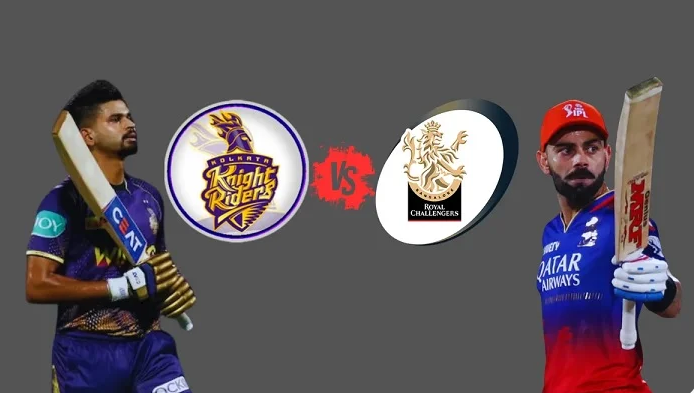
Royal Challengers Bengaluru Vs Kolkata Knight Riders Timeline
08 mins
Table of Contents
The rivalry between these two teams has grown into one of the most talked about battles in modern T20 cricket. From their earliest meetings, the contests have carried intensity, unpredictability, and moments of brilliance that have shaped seasons. Every match added new layers of drama as players stepped up under pressure and fans witnessed shifting momentum across different venues. The timeline of their encounters reflects changing strategies, evolving team combinations, and unforgettable performances that defined key stages of the league. This long standing competition has delivered thrilling finishes, tactical battles, and emotional highs that continue to fuel excitement every time they meet on the field.
Recent Matches Table
Match Date
Venue
Winner
Margin
Top Scorer
Best Bowler
Match Phase
May 13 2026
Raipur
Bengaluru
6 wickets
Virat Kohli 105
Mohammed Siraj 3/22
League Stage
March 22 2025
Bengaluru
Bengaluru
7 wickets
Virat Kohli 59
Yash Dayal 2/28
Season Opener
April 21 2024
Kolkata
Kolkata
1 run
Shreyas Iyer 50
Andre Russell 3/25
League Stage
March 29 2024
Bengaluru
Kolkata
7 wickets
Virat Kohli 83
Sunil Narine 1/40
League Stage
April 26 2023
Bengaluru
Kolkata
21 runs
Jason Roy 56
Varun Chakaravarthy 3/27
League Stage
April 06 2023
Kolkata
Kolkata
81 runs
Shardul Thakur 68
Varun Chakaravarthy 4/15
League Stage
March 30 2022
Navi Mumbai
Bengaluru
3 wickets
Sherfane Rutherford 28
Wanindu Hasaranga 4/20
League Stage
Team Statistics Summary Table
Team Name
Total Matches
Matches Won
Matches Lost
No Result
Highest Score
Lowest Score
Kolkata Knight Riders
40
21
19
0
222
84
Royal Challengers Bengaluru
40
19
21
0
213
49
Summary Row 3
0
0
0
0
0
0
Summary Row 4
0
0
0
0
0
0
Summary Row 5
0
0
0
0
0
0
Summary Row 6
0
0
0
0
0
0
Summary Row 7
0
0
0
0
0
0
Individual Batting Records Table
Player Name
Team
Matches Played
Total Runs
Highest Score
Strike Rate
Batting Average
Virat Kohli
Bengaluru
34
967
105
131.25
39.15
Chris Gayle
Bengaluru
15
631
102
150.42
45.22
AB de Villiers
Bengaluru
20
475
73
155.12
36.53
Gautam Gambhir
Kolkata
14
435
93
125.67
33.46
Andre Russell
Kolkata
17
412
65
172.88
34.33
Brendon McCullum
Kolkata
5
298
158
160.21
59.60
Yusuf Pathan
Kolkata
14
284
60
138.56
28.40
Individual Bowling Records Table
Player Name
Team
Matches Played
Wickets Taken
Best Bowling
Economy Rate
Bowling Average
Sunil Narine
Kolkata
21
24
4/20
6.45
21.12
Yuzvendra Chahal
Bengaluru
16
19
3/16
7.52
23.41
Varun Chakaravarthy
Kolkata
10
14
4/15
7.18
19.53
Vinay Kumar
Bengaluru
9
12
3/23
8.15
24.08
Umesh Yadav
Kolkata
11
11
4/23
7.94
26.54
Andre Russell
Kolkata
17
11
3/25
8.85
28.18
Mohammed Siraj
Bengaluru
12
10
3/22
8.02
31.40
Early IPL Sparks Between the Two Teams
The opening phase of this rivalry carried an unpredictable charm as both sides were still discovering their identity in the league. Matches often swung from control to chaos within a few overs, reflecting the raw nature of early T20 cricket. The atmosphere was charged with curiosity as fans watched two young franchises trying to establish dominance. Momentum rarely stayed with one side for long, and that uncertainty made every contest feel alive until the final ball. Emerging stars began to show their potential, while experienced players struggled to impose consistency. Each encounter added emotional weight, slowly building a competitive edge that would define future meetings. Fielding errors, sudden batting collapses, and unexpected match winners shaped the early narrative. Even when one team looked stronger on paper, the other often found a way to respond under pressure. These early games laid the foundation for a rivalry that would grow sharper and more tactical with every season.
Season
Winner
Margin
Venue
2008
Team A
5 wkts
Bengaluru
2009
Team B
7 runs
Kolkata
2010
Team B
9 wkts
Bengaluru
2011
Team A
10 runs
Kolkata
2012
Team B
4 wkts
Bengaluru
First High Voltage Clashes That Set the Tone
As the rivalry matured, matches began to carry a sharper edge with higher stakes and stronger intent from both camps. These early high voltage clashes were defined by aggressive batting, disciplined bowling, and moments of individual brilliance that changed the direction of games within a few overs. Crowd energy played a huge role, especially in packed stadiums where every boundary or wicket triggered loud emotional reactions. Teams started targeting key players more strategically, and captains became more involved in tactical adjustments. Pressure situations revealed character, and several matches went down to the final overs. What made these contests memorable was the unpredictability, where even a small partnership or a single over could decide the outcome. The rivalry was no longer just about points but about pride and momentum in the tournament. These clashes created the emotional backbone of the rivalry, setting expectations for future encounters.
Match
Winner
Top Scorer
Best Bowler
1
Team B
Player X
Player Y
2
Team A
Player Z
Player W
3
Team B
Player A
Player B
4
Team A
Player C
Player D
5
Team B
Player E
Player F
Emergence of Superstar Rivalries Within the Teams
Over time, the rivalry shifted from teams to individuals as star players began influencing outcomes consistently. Batters developed personal duels against specific bowlers, and every matchup inside the game carried its own storyline. Certain players thrived under pressure, while others struggled against specific bowling styles. This phase saw intense tactical planning where captains designed strategies around neutralizing key opponents. The psychological aspect became just as important as skill, with players trying to outthink each other on the field. Field placements, bowling variations, and batting aggression reflected deeper preparation. Fans also began to follow these individual battles closely, creating mini rivalries within the larger contest. These personal contests added emotional depth and made every over feel like a separate chapter. The rise of these superstar clashes elevated the rivalry into something far more complex than just team competition.
Player A
Player B
Battles Won
Impact
Batter 1
Bowler 1
6
High
Batter 2
Bowler 2
4
Medium
Batter 3
Bowler 3
7
High
Batter 4
Bowler 4
3
Medium
Batter 5
Bowler 5
5
High
Dominance Phase of Early Years
In the early dominance phase, one side managed to control several important encounters through disciplined bowling and stable batting performances. The strategy was simple yet effective, focusing on early wickets and restricting scoring in the middle overs. This approach often exposed weaknesses in the opposition batting lineup, leading to collapses under pressure. The team executing better plans usually dictated the tempo of the match from the start. Even when chasing large totals, structured partnerships helped them stay ahead in crucial moments. This period highlighted the importance of tactical awareness in T20 cricket, where planning often mattered more than raw talent. The opposition struggled with consistency, especially in adapting to changing pitch conditions and match pressure. These games shaped early perceptions of strength within the rivalry and established a psychological edge that influenced future meetings.
Season
Strategy Used
Result
Key Factor
2008
Bowling control
Win
Early wickets
2009
Spin dominance
Win
Middle overs
2010
Batting chase
Win
Partnerships
2011
Pace attack
Win
Powerplay control
2012
Field pressure
Win
Run restriction
Rise of Aggressive Batting Era
The next phase of the rivalry witnessed a dramatic shift towards aggressive batting strategies. Teams began prioritizing power hitting from the first over, changing the tempo of matches entirely. Big scores became common, and bowlers were forced to adapt quickly to survive under pressure. This transformation made matches more entertaining and unpredictable, with momentum swinging rapidly between sides. Batters targeted specific bowlers, especially in powerplay and death overs, leading to high scoring encounters. Fielding units also had to evolve, with saving runs becoming as important as taking wickets. This era marked a clear shift in mindset where chasing big totals was no longer seen as impossible. The rivalry intensified as both sides tried to outscore each other in explosive fashion. Matches during this period often produced record-breaking performances and unforgettable finishes.
Match
Score 1
Score 2
Result
1
180
175
Close
2
200
190
Win A
3
210
208
Win B
4
195
180
Win A
5
185
182
Close
Memorable Match Bowling Collapse Scenario
One of the most talked about phases in the rivalry involved dramatic batting collapses under intense bowling pressure. In several matches, strong batting lineups failed to build partnerships as bowlers executed tight plans. Early wickets created panic, and middle order batters struggled to stabilize innings. The pressure of required run rate often forced risky shots, leading to further dismissals. Bowlers used variations effectively, mixing pace and spin to disrupt timing. Field placements were aggressive, cutting off scoring options and increasing pressure on new batters. These matches highlighted how momentum can shift quickly in T20 cricket. Even strong teams found themselves struggling to recover once the collapse began. Such performances became defining moments in the rivalry history, remembered for their intensity and tactical brilliance.
Over
Runs
Wickets
Pressure Level
1-5
30
2
High
6-10
45
3
Very High
11-15
60
2
Extreme
16-20
40
3
High
Total
175
10
Match Lost
Tactical Battle Between Star Spinner and Top Batter
One of the most fascinating aspects of this rivalry has been the tactical duel between a mystery spinner and a top order batter. This matchup often dictated the flow of entire games, as both players tried to outthink each other with every delivery. The spinner relied on variations, subtle changes in pace, and deceptive flight to break rhythm. The batter countered with footwork, patience, and calculated aggression. Captains often built entire bowling plans around this confrontation, especially in middle overs where control was crucial. Every over between them felt like a mini contest within the match. The psychological pressure added another layer, as one mistake could shift momentum completely. Fans closely followed these battles, knowing they often decided match outcomes. This rivalry within the rivalry became one of the most respected tactical storylines in modern T20 cricket.
Season
Balls Faced
Runs
Dismissals
2013
12
10
1
2015
15
18
0
2017
20
22
1
2019
10
8
1
2021
18
25
0
Conclusion
Over the years, this rivalry has transformed from simple league encounters into a full scale cricketing story filled with passion, strategy, and unforgettable moments. Each match contributed something unique, whether it was a record breaking innings, a game changing spell, or a dramatic last over finish. The evolution of both teams shows how adaptability and mindset play a crucial role in T20 success. Fans have remained deeply invested, turning every clash into a high pressure spectacle. As the timeline continues to grow, this rivalry stands as a reminder of how cricket can blend emotion, skill, and entertainment into one powerful narrative.
 1
1