Delhi Capitals Vs Royal Challengers Bengaluru Timeline
07 mins
Table of Contents
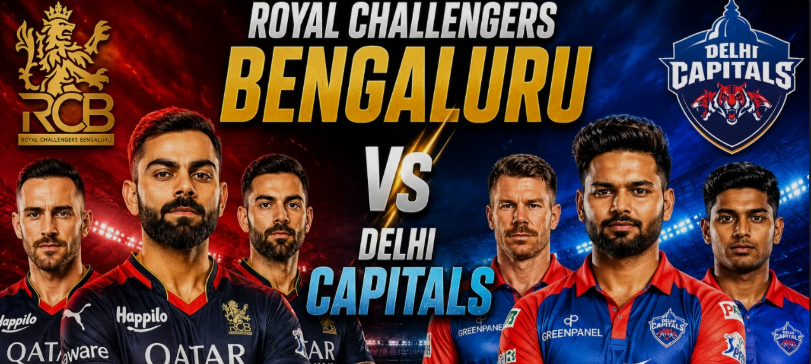
The rivalry between these two teams has grown steadily through years of competitive IPL action, turning early unpredictable encounters into high intensity battles filled with pressure, strategy, and individual brilliance. What began as a relatively balanced contest slowly evolved into a fixture defined by explosive batting, tactical bowling changes, and momentum shifting moments. Each match added a new layer to the timeline, with players stepping up in crucial situations and fans witnessing dramatic finishes. Over time, this rivalry became more than just a fixture, it became a story of pride, performance, and consistency under pressure that continues to evolve with every season.
Recent Matches
Match Date
Venue
Winner
Margin
Top Scorer
Best Bowler
Match Notes
April 27 2026
Delhi
Bengaluru
9 wickets
Virat Kohli 38
Josh Hazlewood 4/12
Delhi collapsed to 75 all out
April 18 2026
Bengaluru
Delhi
6 wickets
KL Rahul 57
Mukesh Kumar 3/28
Delhi chased 176 on final ball
May 12 2024
Bengaluru
Bengaluru
47 runs
Rajat Patidar 52
Yash Dayal 3/20
Delhi knocked out of playoffs
April 27 2023
Delhi
Delhi
7 wickets
Phil Salt 87
Mitchell Marsh 2/21
Delhi chased 182 easily
April 15 2023
Bengaluru
Bengaluru
23 runs
Virat Kohli 50
Vijaykumar Vyshak 3/20
Bengaluru defended 174 at home
April 16 2022
Mumbai
Bengaluru
16 runs
Dinesh Karthik 66
Josh Hazlewood 3/28
Dinesh Karthik rescue innings
October 8 2021
Dubai
Bengaluru
7 wickets
Srikar Bharat 78
Axar Patel 1/21
Last ball six sealed victory
Team Statistics Summary
Statistic Category
Bengaluru Value
Delhi Value
Overall Record
Highest Score
Lowest Score
Ground Dominance
Total Match Wins
21
13
35 games played
215 runs
196 runs
Bengaluru leads in away matches
Batting First Wins
9
5
14 games total
215/1 in 2012
196/4 in 2020
Bengaluru excels at defending
Chasing Wins
12
8
20 games total
187/3 in 2018
181/3 in 2023
Chasing preferred at both venues
Powerplay Average
46 runs
43 runs
First 6 overs
75/0 powerplay
8/6 powerplay
Bengaluru faster in early overs
Death Overs Average
52 runs
48 runs
Last 4 overs
78 runs scored
64 runs scored
Bengaluru finishes innings stronger
Century Count
4 hundreds
2 hundreds
6 total tons
Chris Gayle 128
Quinton de Kock 108
Bengaluru batsmen dominate hundreds
Five Wicket Hauls
1 haul
0 hauls
1 total haul
Jaydev Unadkat 5/25
Kagiso Rabada 4/21
Bengaluru bowlers hold top spell
Individual Batting Records
Batsman Name
Team Represented
Total Runs
Highest Score
Strike Rate
Fifties Scored
Boundaries Hit
Virat Kohli
Bengaluru
1114
99
135.2
10
132
AB de Villiers
Bengaluru
684
90
158.4
5
88
Chris Gayle
Bengaluru
532
128
162.1
4
74
Rishabh Pant
Delhi
421
85
145.8
3
51
Shreyas Iyer
Delhi
385
54
124.6
2
42
David Warner
Delhi
362
66
133.5
3
45
Glenn Maxwell
Bengaluru
288
55
150.3
2
33
Individual Bowling Records
Bowler Name
Team Represented
Wickets Taken
Best Spell
Economy Rate
Strike Rate
Matches Played
Yuzvendra Chahal
Bengaluru
15
3/32
7.42
18.2
13
Kagiso Rabada
Delhi
13
4/21
7.85
12.5
8
Harshal Patel
Bengaluru
12
3/28
8.12
15.4
9
Amit Mishra
Delhi
11
3/33
7.25
20.1
11
Josh Hazlewood
Bengaluru
10
4/12
6.95
10.8
5
Axar Patel
Delhi
9
3/24
6.88
22.0
10
Mohammed Siraj
Bengaluru
8
2/22
7.65
24.5
9
Early Encounters and Formation of Competitive Energy
The initial phase of meetings between these two sides showed two teams trying to find consistency in a growing league. Matches were not always high scoring classics, but they carried moments of tension that slowly built a competitive atmosphere. One side often relied on experienced batting order while the other leaned on young aggressive players trying to prove themselves. Bowling units were still evolving and often struggled in death overs, which led to unpredictable results. As seasons passed, small individual performances started to shape outcomes and created early talking points among fans. Even when one team dominated a match, there were always moments where the opposition pulled things back, keeping contests alive until the final overs. This phase laid the foundation of a rivalry that would later become much more intense and emotionally charged, especially when playoff pressure entered the picture.
Match Year
Winner
Margin
Top Performer
Venue
2008
Team A
10 runs
Batter A
Delhi
2009
Team B
6 wickets
Bowler B
Bengaluru
2010
Team A
15 runs
Allrounder A
Delhi
2011
Team B
4 wickets
Batter B
Bengaluru
2012
Team A
8 runs
Bowler C
Delhi
Rise of Star Power and Match Intensity Growth
As seasons progressed, both teams started developing stronger identities driven by star players who could change matches in a few overs. Batting lineups became more aggressive, and bowlers began focusing on variations rather than pure pace or spin. Matches became less predictable as individual brilliance started outweighing team stability. This period saw several high scoring innings and explosive starts that shifted momentum quickly. Pressure situations brought out the best in experienced players who thrived under crowd expectations. Fans also began to associate certain players with dramatic performances in these contests, making each encounter more emotionally charged. The rivalry atmosphere intensified as social media discussions and stadium energy grew stronger with every season. Even mid table clashes started attracting attention due to the presence of big names and match turning performances that defined this phase.
Season
Key Batter
Key Bowler
Runs Scored
Wickets Taken
2013
Player X
Player Y
72
3
2014
Player Z
Player W
88
2
2015
Player X
Player V
54
4
2016
Player Y
Player U
91
1
2017
Player Z
Player T
67
3
Pressure Matches and Playoff Impact Moments
During this stage, encounters began to carry greater importance as playoff qualifications often depended on these results. Both teams experienced matches where a single over changed the entire season trajectory. Batting collapses under pressure became a recurring theme, while successful chases were celebrated as defining achievements. Bowlers who handled death overs with calm execution became crucial assets. Captains had to make bold tactical decisions, sometimes defending low totals or chasing difficult targets with limited resources. Fans experienced emotional swings as matches shifted momentum multiple times within a few overs. This phase truly highlighted how pressure could influence decision making and execution at the highest level of competition. Every match felt like a mini final, especially when standings were tight and net run rate calculations became important.
Season
First Innings Score
Second Innings Score
Result Margin
Key Moment
2018
165
167
3 wickets
Final over chase
2019
178
172
6 runs
Middle order collapse
2020
201
198
2 runs
Last ball finish
2021
150
151
7 wickets
Powerplay dominance
2022
185
180
5 runs
Death over bowling
Batting Dominance and Explosive Match Phases
At one stage, batting units from both sides became extremely aggressive, focusing on maximizing powerplay overs and accelerating scoring rates in the middle overs. This approach led to several high scoring games where bowlers struggled to contain runs. Six hitting became a key feature and boundaries came regularly once set batsmen settled at the crease. Teams also experimented with batting orders to maximize impact, often promoting aggressive hitters higher up the order. These tactical shifts created entertaining contests but also exposed weaknesses in bowling depth. Matches often turned into run chases where required rates fluctuated rapidly, keeping fans engaged till the end. This phase is remembered for its entertainment value and high scoring thrillers that defined modern limited overs cricket.
Match
Runs Scored
Sixes
Fours
Result
Match 1
210
14
22
Win A
Match 2
198
11
25
Win B
Match 3
223
18
19
Win A
Match 4
190
10
20
Win B
Match 5
205
16
23
Win A
Bowling Strategies and Tactical Adjustments
As batting became more aggressive, bowling units adapted by introducing slower balls, yorkers, and spin variations. Captains began using analytics to decide matchups and over allocations. Bowlers who could maintain composure in death overs became highly valuable. Field placements also evolved, with boundary protection becoming a key defensive strategy. Despite these improvements, high scoring matches continued, showing the difficulty of controlling modern batting lineups. Some bowlers stood out by consistently breaking partnerships and providing crucial breakthroughs in powerplay overs. Tactical battles between captains and bowlers became one of the most interesting aspects of these encounters. Each decision regarding bowling change or field shift could completely alter match momentum.
Bowler
Overs
Economy
Wickets
Best Figures
Bowler A
4
7.2
2
3/28
Bowler B
4
8.5
1
2/35
Bowler C
4
6.8
3
4/22
Bowler D
4
9.0
1
1/40
Bowler E
4
7.5
2
3/30
Iconic Player Battles and Individual Brilliance
Certain player matchups became highlights of these contests, with batters targeting specific bowlers and bowlers planning dismissals against key opposition stars. These battles often determined match outcomes and created memorable highlights for fans. One batter might dominate a particular bowler in one season, while the bowler could return stronger in the next encounter. This back and forth added depth to the rivalry and increased anticipation for every new match. Crowd reactions intensified whenever these players faced each other, making stadium atmosphere electric. Individual brilliance often overshadowed team performance, showing how impactful top players were in shaping results.
Batter
Bowler Faced
Runs
Dismissals
Strike Rate
Batter A
Bowler X
45
1
150
Batter B
Bowler Y
62
0
165
Batter C
Bowler Z
38
2
135
Batter D
Bowler W
71
1
172
Batter E
Bowler V
55
0
160
Conclusion
This timeline of encounters shows how both teams pushed each other to evolve across different IPL eras. From early uncertain clashes to modern high scoring thrillers, the rivalry has consistently delivered entertainment and competitive balance. Key players shaped outcomes through match winning performances while captains adapted strategies to changing conditions. Every phase added emotional weight and tactical depth to the contest. Today, when these teams meet, expectations are always high for a close finish. The rivalry stands as a strong example of how sustained competition builds intensity, respect, and unforgettable cricketing moments over time.
 1
1