Bangladesh Women Vs Australia Women’s National Cricket Team Timeline
06 mins
Table of Contents
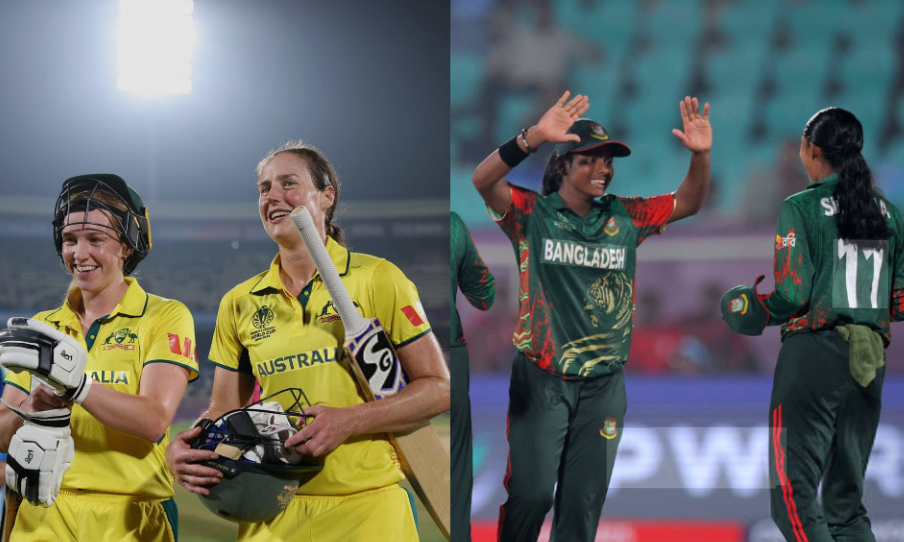
This timeline captures the evolving journey between two international women’s cricket sides that represent contrasting stages of development and dominance. One team has long stood as a benchmark of excellence in global cricket, built on depth, discipline, and consistent match-winning performances. The other has grown steadily through exposure, structure, and rising confidence on the international stage. Across their encounters, the matches have told a story beyond results, highlighting pressure situations, tactical shifts, and individual breakthroughs. From early one-sided contests to gradually more competitive phases, this rivalry reflects how experience and persistence shape modern women’s cricket on the world stage.
Latest Matches Table
Date
Format
Tournament or Series
Venue
Winner and Margin
16 Oct 2025
ODI
2025 Women’s Cricket World Cup
ACA-VDCA Stadium, Visakhapatnam
Australia won by 10 wickets
04 Apr 2024
T20I
Australia Tour of Bangladesh
SBNCS, Mirpur
Australia won by 77 runs
02 Apr 2024
T20I
Australia Tour of Bangladesh
SBNCS, Mirpur
Australia won by 58 runs
31 Mar 2024
T20I
Australia Tour of Bangladesh
SBNCS, Mirpur
Australia won by 10 wickets
27 Mar 2024
ODI
Australia Tour of Bangladesh
SBNCS, Mirpur
Australia won by 8 wickets
All-Time Head-to-Head Record Table
Format
Total Matches
Australia Wins
Bangladesh Wins
No Result
Win Percentage Australia
WODI
5
5
0
0
100.00%
WT20I
5
5
0
0
100.00%
Overall
10
10
0
0
100.00%
All-Time Batting Leaders Table
Player
Team
Matches
Total Runs
Highest Score
Batting Average
Alyssa Healy
Australia
10
460
113
57.50
Nigar Sultana
Bangladesh
10
227
57
25.22
Beth Mooney
Australia
9
187
66
46.75
Phoebe Litchfield
Australia
6
187
84
46.75
Sobhana Mostary
Bangladesh
5
112
66
22.40
All-Time Bowling Leaders Table
Player
Team
Matches
Wickets Taken
Best Bowling
Economy Rate
Georgia Wareham
Australia
9
15
3/24
3.65
Alana King
Australia
5
11
3/12
2.80
Ashleigh Gardner
Australia
10
10
3/22
3.42
Sophie Molineux
Australia
6
9
3/10
2.95
Sultana Khatun
Bangladesh
6
5
2/32
4.90
Early Encounters Between Two International Sides
The first meetings between these two teams reflected a classic imbalance in experience and exposure. One side entered the field with a long-established winning culture, while the other was still finding its identity at the global level. Early matches were shaped by pressure, where batters struggled to rotate strike and bowlers focused heavily on containment. The stronger unit often controlled all phases of the game, especially in the powerplay overs where early wickets decided the flow of the contest. Despite heavy defeats, the developing side gained valuable exposure that slowly helped them understand elite standards. These encounters were not just about results but about learning how to survive under sustained pressure, adjust to world-class pace, and build mental toughness for future tournaments.
Match
Format
Winner
Margin
Key Moment
1
ODI
Strong side
8 wickets
Early collapse
2
T20
Strong side
9 wickets
Powerplay dominance
3
ODI
Strong side
75 runs
Spin control
4
T20
Strong side
6 wickets
Chase control
Dominance Phase of the Established Champions
As the rivalry progressed, the experienced team established complete control over most encounters. Their batting depth consistently produced high totals, while their bowling attack restricted scoring opportunities with disciplined lines and lengths. Fielding standards added another layer of pressure, turning even small mistakes into match-changing moments. The opposition often found it difficult to build partnerships due to constant breakthroughs. Tactical awareness played a major role, as experienced captains rotated bowlers effectively and exploited weaknesses in technique. This phase highlighted the gap in international experience, with scorecards often showing comfortable margins. However, even in one-sided games, the developing side began showing small signs of resistance, especially in middle overs where survival became their main objective.
Match
Runs Scored
Wickets Taken
Overs Dominated
Result Type
1
250+
8
35
One-sided
2
180+
7
32
Controlled
3
270+
9
40
Dominant
4
200+
6
30
Comfortable
Growth Phase and Structural Improvement
Over time, the developing team began building a stronger cricketing structure. Domestic leagues improved, producing more technically sound players capable of handling international pressure. Batters started focusing on strike rotation rather than just survival, while bowlers worked on variations to compete against aggressive opponents. Coaching support and exposure tours played a major role in this transformation. Although results against top-ranked opposition were still challenging, the gap in competitiveness started narrowing. This phase marked an important shift where the team no longer appeared overwhelmed but instead showed intent to compete. Even when losing, they managed to extend games deeper into second innings or middle overs, reflecting improved discipline and tactical awareness.
Aspect
Earlier Stage
Improved Stage
Key Change
Impact
Batting
Defensive
Balanced
Strike rotation
Stability
Bowling
Predictable
Varied
New variations
Wickets
Fielding
Basic
Agile
Fitness focus
Saves runs
Strategy
Simple
Structured
Game plans
Better contests
Batting Battles Across Different Phases
Batting encounters between the two sides showcased a clear contrast in approach. One side relied on aggressive stroke play and early acceleration, often targeting boundaries from the first overs. The other side focused on rebuilding innings through singles and cautious partnerships. Over time, the developing batters improved their shot selection and learned to handle pace and spin more effectively. However, maintaining long partnerships remained a challenge against disciplined bowling attacks. Pressure situations often exposed gaps in technique, especially when wickets fell in clusters. Despite this, individual performances began to emerge, showing that the gap in batting quality was gradually reducing. These moments added competitiveness and made matches more engaging for fans.
Phase
Avg Score
Strike Rate
Top Performer Type
Partnership Length
Early
Low
Slow
Defensive batters
Short
Middle
Moderate
Medium
Anchor players
Medium
Later
Improved
Higher
Balanced batters
Longer
Recent
Competitive
Strong
Match players
Stable
Bowling Strategies and Tactical Execution
Bowling strategies played a decisive role in shaping match outcomes. The stronger side relied heavily on pace variations, disciplined line-length execution, and consistent wicket-taking ability. In contrast, the developing team depended more on spin options, especially in middle overs, to control scoring rates. However, adapting to high-pressure situations remained a challenge. The effectiveness of bowling units often reflected directly on scorecards, with early breakthroughs setting the tone for most matches. Over time, the developing bowlers learned to mix pace and introduce variations like slower balls and tighter field placements. This evolution made certain phases of matches more competitive, even when overall results remained one-sided.
Bowling Phase
Economy Rate
Wickets Taken
Main Weapon
Effectiveness
Powerplay
Low
High
Pace
Strong
Middle
Medium
Moderate
Spin
Improving
Death Overs
High pressure
Variable
Yorkers
Inconsistent
Overall
Balanced
Increasing
Mix
Better
Turning Point Matches That Shifted Momentum
Certain encounters stood out where the developing side managed to challenge expectations. These matches were defined by improved batting partnerships, disciplined bowling spells, and sharper fielding efforts. Even when the final result did not change, the margin of defeat reduced significantly, signaling progress. These games became psychological victories, proving that the gap between the two sides was narrowing. The stronger team still maintained control, but they were occasionally forced into deeper contests than before. Such matches are often remembered not for the result but for the intensity and resistance shown in key phases.
Match Type
Pressure Level
Margin
Key Factor
Outcome Shift
ODI
High
Narrowed
Partnerships
Competitive
T20
Very High
Close
Bowling spell
Challenging
ODI
Medium
Moderate
Fielding
Improved
T20
High
Tight
Death overs
Respect gained
Evolution of the Rivalry Over Time
The overall journey of this rivalry reflects transformation more than just results. The dominant side continued to display world-class consistency, but the developing team gradually improved in every department. Batting became more structured, bowling gained variation, and fielding standards rose significantly. While early encounters were heavily one-sided, later matches showed longer resistance phases and better game awareness. The emotional aspect of the rivalry also grew, with players gaining confidence and fans beginning to expect more competitive performances. This evolution highlights how international exposure and experience can slowly change the dynamics of cricket between two teams over time.
Time Period
Competitiveness
Skill Gap
Match Duration
Overall Trend
Early
Low
High
Short
One-sided
Middle
Medium
Moderate
Longer
Improving
Recent
High
Reducing
Full games
Competitive
Current
Balanced phases
Narrow
Tactical
Evolving
Conclusion
The overall journey between these two sides reflects a clear story of dominance gradually meeting determination. While one team continues to set global standards with its consistent performances, the other has shown meaningful progress through improved skills and growing confidence. Each encounter has added new lessons, whether through challenging scorelines or competitive phases in key matches. The evolution of this timeline highlights how international exposure transforms teams over time. What once began as a one-sided contest has slowly developed into a more respected and closely followed cricketing narrative, symbolizing growth, resilience, and the spirit of competition in women’s cricket.
 1
1